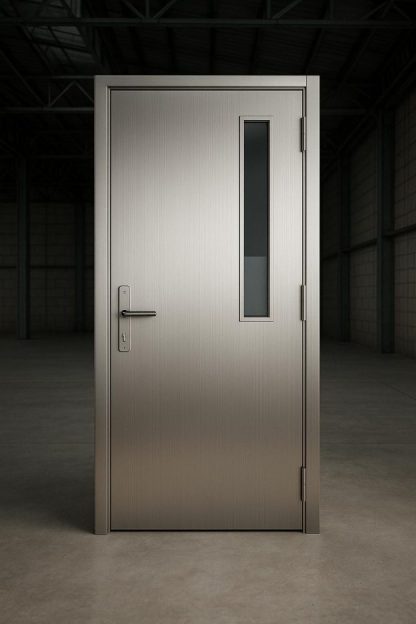
Can a glass door be fire rated? Yes, it can. Fire rated glass doors for homes and condos pair tested glass with a certified frame. As a result, an opening that needs a fire rating does not have to be a solid slab of wood or steel. This guide explains how these doors work. It also covers what the ratings mean and what to check before you specify one.
Can You Have a Fire Door With Glass?
Yes. Ordinary glass cracks and falls out under heat. For that reason, a fire door with glass uses glass that has been tested for fire exposure. The frame goes through the same testing. Together, the glass, frame, and hardware form one assembly. That assembly carries a listing and a label under standards such as UL 10C and NFPA 252. Inspectors look for that label on site.
However, regular glass in a rated opening generally does not meet code. This is true even when the frame itself has a rating.
Fireproof vs. Fire Rated: What the Terms Mean
Many people search for a fireproof glass door. In fact, no door is truly fireproof. A fire rating measures time. It tells you how long a tested assembly can hold back fire and smoke. Common ratings are 45, 60, and 90 minutes. After that time, the door is expected to fail like any other. That is why codes and labels say fire rated, not fireproof.
Fire rated glass also comes in two broad types. First, fire protective glass blocks flames and smoke. However, it lets heat pass through. For this reason, codes limit where it can go and how large it can be. Second, fire resistive glass also limits heat transfer. As a result, it allows larger glass areas. Your wall construction and local code decide which type an opening needs. The Authority Having Jurisdiction (AHJ) makes the final call for your building.
Fire Ratings: 45, 60, and 90 Minutes
The rating you need depends on three things. These are the wall construction, the use of the space, and local code. For example, corridors, elevator lobbies, stairwell enclosures, and dwelling unit entries often call for different ratings. Therefore, confirm the rating before you order. Ask your architect, fire protection engineer, or local building department. Our guide to fire door ratings from 20 to 90 minutes explains how ratings are assigned.
Frames, Swing Types, and Sizes
Fire rated glass doors come in steel and aluminum frames. They also come as hinged or pivot doors. Apex Fire Doors supplies Tecfire’s certified systems:
- SteelFire STB80 (steel frame): hinged or pivot doors. The maximum door height is 98¾ inches. The maximum single leaf width is 52¾ inches.
- AluFire AS85 (aluminum frame): hinged doors rated 45 or 60 minutes. Finishes include powder coat and anodized, with stainless steel and wood effect options.
Both systems carry UL 10C and UL 10B listings. They also test to NFPA 252 and meet ANSI Z97.1 glazing safety requirements. In addition, Intertek lists and labels them, and they pass hose stream testing. See our fire rated glass systems for sizes and configurations.
Making Fire Rated Glass Doors for Homes Part of the Design
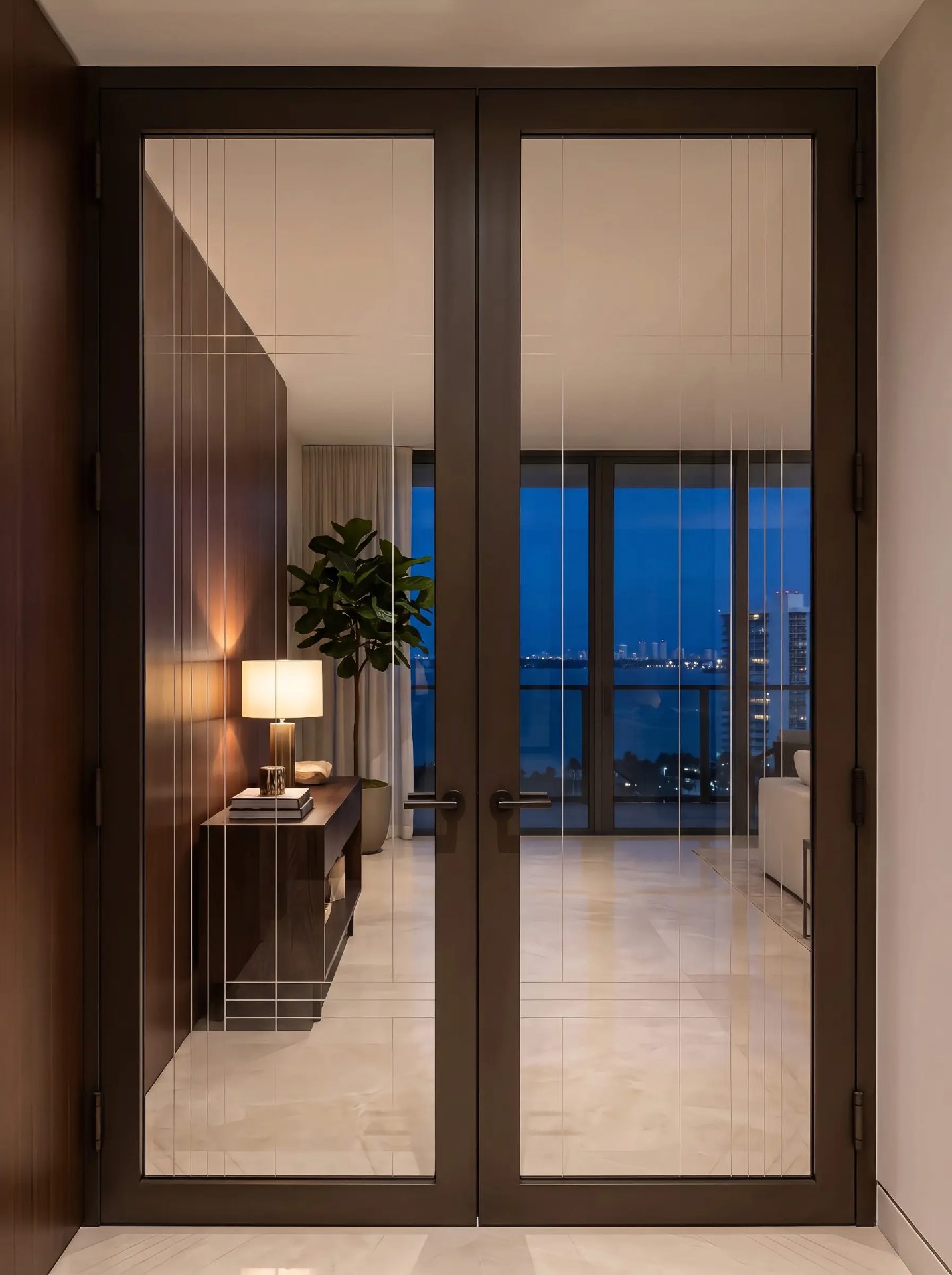
Fire rated glass no longer has to look like an office door. Clean, square frame profiles, custom finishes, and full-height glass keep sightlines open. As a result, light moves through the home. For apartment entries, see how this works in a luxury foyer.

Some owners and designers want the glass itself to carry the design. For them, the Iberi Signature Series adds a custom artistic glass design to a Tecfire fire rated door system. Every door is designed for one client and one home, so no two are alike. In Florida, the Iberi Signature Series is for interior applications only. In other states, exterior availability depends on local wind load, water infiltration, and impact code requirements.
Interior and Exterior Use
In Florida, these fire rated glass door systems are for interior openings. Exterior openings in Florida need hurricane impact approval under the Florida Building Code. For that reason, confirm the location of the opening before you specify any door. Other states may not require that approval. There, exterior use depends on local code and on wind load and water pressure requirements. We can confirm availability project by project. If you manage a condo or multifamily building, read our guide to condo fire door compliance in South Florida.
Keeping a Fire Door Compliant After Installation
A fire door only protects the building if it keeps working. That is why NFPA 80 requires annual inspection and testing of fire door assemblies. You must keep the documentation on site. Our Miami-Dade fire door inspection checklist shows what inspectors look for. In addition, our page on fire door technology and certifications explains each listing and label.
Frequently Asked Questions
Can a glass door be fire rated for a home?
Yes. Fire rated glass door systems pair tested glass with a certified frame. The whole assembly carries a listing and a label. Ratings of 45, 60, and 90 minutes are available, depending on the system and configuration.
Is there such a thing as a fireproof glass door?
No. No door is fireproof. Instead, doors are fire rated. A tested assembly resists fire and smoke for a set time, such as 45, 60, or 90 minutes.
Do fire doors with glass have to look industrial?
No. Clean frame profiles, custom finishes, and full-height glass fit a residential design. In addition, the Iberi Signature Series offers custom artistic glass designs.
Can the Iberi Signature Series go on exterior doors?
Not in Florida. Hurricane impact approval requirements limit it to interior use there. In other states, exterior availability depends on local wind load, water infiltration, and impact code requirements. Confirm with us before you specify.
Who decides which fire rating my opening needs?
The Authority Having Jurisdiction (AHJ) makes the final call. It bases the decision on the wall construction and the use of the space. Confirm the rating with your architect, fire protection engineer, or local building department before you order.
Ready to talk through an opening? Contact Apex Fire Doors at (305) 396-2020. We will help you match the glass, frame, and hardware to your project.